The Chattel Conversation Every Buyer and Seller Needs to Have
In real estate, the devil is in the details. One of the most overlooked and dispute-prone areas in any transaction is chattel: the moveable items that a seller agrees to include with a property. As a real estate agent getting this right, and getting it in writing, can mean the difference between a smooth closing and a very uncomfortable one.
Whether you are buying or selling a home in Halifax or anywhere in Nova Scotia, the list of included chattels can create real confusion and real conflict if it is not handled carefully from the very beginning.
What Is Chattel, and Why Does It Matter?
In real estate law, a fixture is something permanently attached to the property — think built-in cabinetry, light fixtures, or a furnace. Chattel, on the other hand, refers to moveable personal property that may or may not be included in a sale. Common examples include appliances, window coverings, storage shelving, lawn equipment, and furniture. The challenge is that the line between what is a fixture and what is chattel is not always obvious, and reasonable people disagree on it regularly.
When there is ambiguity about what is staying and what is leaving, feelings of betrayal, accusations of bad faith, and even legal disputes can follow. In my years working in this market, I have seen transactions that should have been straightforward become contentious and entirely because the chattel conversation was not had clearly enough, early enough.
Is there a Gap Between the Listing and the Offer?
What a seller lists as included in their MLS® listing or listing agreement is not automatically what ends up in the Agreement of Purchase and Sale. These are two separate documents, and what appears in one does not carry over to the other unless it is explicitly written in.
A seller may advertise that certain items are included and a buyer may build their entire offer and decision around that assumption, but if those items are not spelled out in the agreement itself, they may not be legally required to transfer with the property. Conversely, a seller may intend to take something that the buyer assumed was staying, and without a clear exclusion noted in the agreement, the situation can become messy.
Both agents and their clients need to treat the chattel in the agreement as its own conversation and not a rubber stamp of whatever appeared in the listing.
| IMPORTANT TO UNDERSTAND What is advertised as included in the MLS listing is not automatically binding in the Agreement of Purchase and Sale. Every item a buyer is counting on must be explicitly named in the offer itself. Assumptions made from the listing can leave a buyer without recourse at closing. |
The Pitfalls Are in the Details
The most common mistakes do not happen because people are dishonest — they happen because people think at the category level rather than the component level. A seller agrees to include something without thinking about all its parts. A buyer and their agent record the item without asking the follow-up questions. Here are some real-world examples of how this plays out.

Central Vacuum — Without the Attachments A seller agrees to include the central vacuum system. The buyer assumes this means the hoses, attachments, power head, and wall-mount accessories. The seller’s understanding? The in-wall unit stays because it’s built in; everything else was packed in a box and moved to the new home. At closing, the buyer has a functioning motor in the wall and nothing to connect to it.
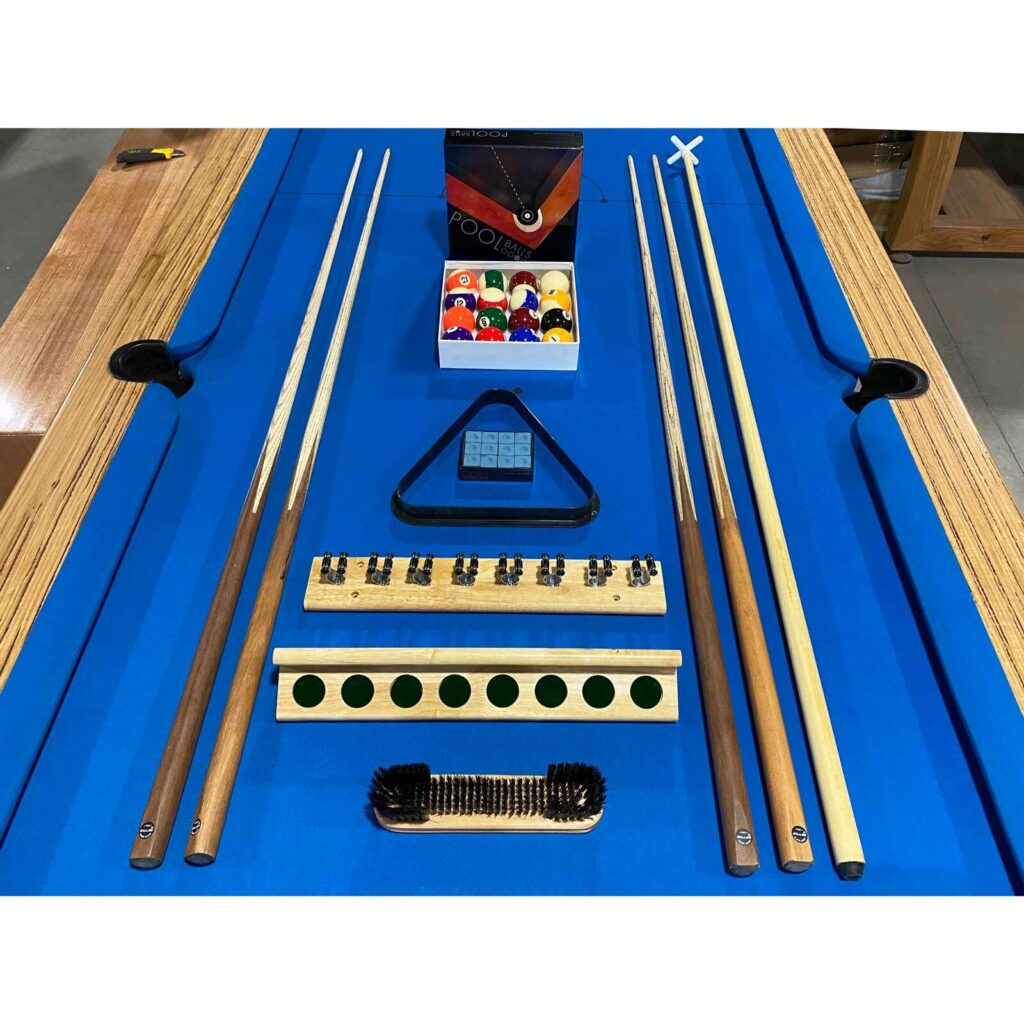
Pool Table — Without the Accessories A billiard table is listed as included chattel. The buyers are thrilled — they have always wanted one. What arrives at closing is the table itself, no cues, no rack, no balls, no triangle, no chalk. Replacing a full set of quality billiard accessories is not inexpensive, and the sellers did not feel they were doing anything wrong. The agreement simply said “pool table.”
Mounted Television A large wall-mounted TV is noted as included. The seller removes the television and leaves the mount. Or takes both. Or leaves the TV but takes the wall bracket, leaving holes in a freshly painted wall. Without specifying “television and wall mount,” there is room for disagreement in every direction.
Garage Door Opener The garage door opener is included — the wall-mounted unit, the ceiling motor, and one remote. But there were three remotes and a keypad. The seller packs the extra remotes and the exterior keypad for convenience. The buyer is left with a single remote for a household that needs more. A note specifying “all remotes and keypads” would have resolved this entirely.
Hot Tub — Without the Cover and Accessories A hot tub is listed as included. The seller drains it, removes the insulated cover, takes the cover-lift mechanism (purchased separately), and removes the chemical kit stored nearby. The buyer inherits a tub with no cover in a Nova Scotia winter and no starting chemicals. The cover lift alone can cost several hundred dollars to replace.
Outdoor Play Structure A large backyard play structure is listed as included. Days before closing, the seller disassembles it for a relative. Whether it was a fixture or chattel becomes a real point of contention, and the buyers — who purchased with young children in mind — feel blindsided. Even when sellers believe they have the right, the damage to the transaction can be significant.
Window Coverings — Only Some of Them Drapes, blinds, and sheers are listed as included. The seller removes the custom drapes from the primary bedroom because they were a gift and emotionally significant. The buyers walk through the property post-removal and the house feels completely different. “Window coverings” means different things to different people without room-by-room specifics.
Window Coverings — Only Some of Them Drapes, blinds, and sheers are listed as included. The seller removes the custom drapes from the primary bedroom because they were a gift and emotionally significant. The buyers walk through the property post-removal and the house feels completely different. “Window coverings” means different things to different people without room-by-room specifics.
What Sellers Need to Know
If you are selling your home, take the time to walk through every room — including the garage, basement, and backyard — and be deliberate about what you are leaving and what you are taking. If something is staying, be specific about what that means. If something is going with you, exclude it explicitly in your listing and make sure your agent carries that exclusion forward into the agreement.
It is also worth considering how a buyer might interpret a room when they walk through it. Mounted speakers, a generator plugged in outside, a water softener, shelving in a garage, any of these can become a point of confusion at closing if they are not clearly addressed.
| ITEMS SELLERS SHOULD SPECIFICALLY ADDRESS All appliances — specify brand, model, and which components are included (water filter, stove grates, dishwasher racks)Central vacuum system — unit and all attachments, hoses, and wall-mounted accessoriesGarage door openers — all remotes, wall-mounted keypads, and the ceiling unitHot tub — cover, cover-lift hardware, and any chemical storageWindow coverings — room by room, type by typeOutdoor structures, play equipment, sheds, and storageMounted electronics — televisions, speakers, and their hardwareGenerator, water treatment equipment, propane tanksLawn equipment, snowblowers, and garden tools if represented as includedPool or billiard table accessories — cues, balls, rack, lighting |
What Buyers and Their Agents Need to Do
As a buyer, never assume. If you walked through a home and something caught your eye like a piece of furniture, a mounted speaker system, a chest freezer in the basement then ask about it directly. Then make sure your agent includes it in the offer if it matters to you.
Your agent should be asking questions during the offer preparation process: What specifically does the seller mean by this item? Does this include all components? Has anything changed since the listing was published? That due diligence step costs nothing and protects you from arriving at a closing where reality does not match expectation.
Then comes the pre-closing walkthrough, which gives you the opportunity to verify that all agreed-upon chattel is present, and in the same condition as when you made your offer. It is one of the most important protections a buyer has before handing over the balance of funds.
The Role of the REALTOR®
A good agent on either side of the transaction treats the chattel schedule as a priority, not an afterthought. Sellers’ agents should be sitting down with their clients before the listing goes live and having a room-by-room conversation about what is staying and what is not and then making sure that understanding is reflected accurately in the listing and, critically, in any agreement that follows.
Buyers’ agents should be reviewing the included items from the listing against the agreement carefully, asking clarifying questions, and ensuring their clients understand that what they saw in the listing is not always what will be confirmed in the contract. If there is any ambiguity, it needs to be resolved in writing before the offer is signed.
Neither side benefits from leaving this conversation to chance. When both parties have a clear, shared understanding of what is included right down to the pool cue rack and the spare garage remote everyone walks away from closing with the experience they expected to have.
| THE BOTTOM LINE A transaction that closes smoothly is one where nothing was assumed and everything that mattered was written down. Take the chattel conversation seriously from day one at the time of the listing and in the agreement and you protect everyone involved from the kind of disappointment and conflict that can sour what should be one of the most positive milestones of your clients life. |
If you have questions about buying or selling in Halifax, Dartmouth, or anywhere across the Halifax Regional Municipality, I am always happy to walk you through the process — including the conversations that do not always make the highlight reel but matter just as much.
| Dale Cameron REALTOR® · RE/MAX Nova · RMA Top 100 Agent in Canada · Best in Halifax 2024 R-Oscars 4.99-star rated on RankMyAgent across 46+ verified reviews 902-240-0768 · dale@halifaxdartmouth.com · HalifaxDartmouth.com |

Leave a Reply