
Is Trading Square Footage for Amenities the Smartest Move You’ll Ever Make?
By Dale Cameron, REALTOR® | RE/MAX Nova | HalifaxDartmouth.com
There’s a conversation I have with buyers fairly regularly, and it almost always starts the same way: they’ve toured a condo they genuinely love, the location is perfect, the finishes are sharp — and then they look at the square footage and hesitate.
“But where would we put everything?”
It’s a fair question. But it’s also — and I say this with respect — sometimes the wrong one. Because in a well-amenitized condo building, the question isn’t just what fits inside your unit. It’s what the building itself does for you. And once you start thinking about it that way, a lot of things shift.
Don’t be caught saying “I should have bought it when I saw it.”
The Storage Locker Question
One of the first objections I hear about condos is storage. And look — the concern is real. Condos are generally tighter than houses, and if you’ve spent years accumulating a basement’s worth of seasonal gear, sports equipment, holiday decorations, and things you’re not ready to part with but definitely don’t need on Tuesday, a 750-square-foot unit can feel like a puzzle with too many pieces.
But here’s what gets overlooked: almost every well-managed condo building in Halifax and Dartmouth assigns a storage locker to each unit. These aren’t afterthoughts — they’re dedicated, secure spaces, often climate-friendly, and sized to handle exactly what you’d have shoved in a basement corner anyway.
The difference is that your in-unit space stays clean. Your living room doesn’t moonlight as a storage unit. Your closets hold clothes, not hockey bags. The stuff you only need a few times a year lives where it belongs — out of sight, retrievable when you need it, not underfoot every single day.
A finished basement sounds like a lot of square footage on paper. But if half of it is packed with things you rarely touch, the livable reality of a condo locker plus a well-designed unit often wins.
The Guest Suite: Do You Actually Need That Spare Room?
This one is worth sitting with for a moment. How many nights per year do you actually have overnight guests? Be honest.
For most people, the answer is somewhere between a handful and a dozen. Family visits around the holidays, an out-of-town friend passing through, maybe a sibling for a long weekend. The rest of the year? That spare room holds a bed, a dresser, and a lot of quiet.
Now consider what many condo buildings offer: a dedicated guest suite, available for residents to book for visiting friends and family. You pay a small nightly or weekly fee — typically very reasonable — and your guests get a proper, private space to stay. You get your square footage back.
That room you were planning to furnish, heat, cool, and carry mortgage costs on for 365 days a year — so guests could use it 10 of those days — is now a home office, a proper dining room, a reading nook, a workout space, or simply a living room that actually breathes.
I’m not saying a spare room has no value. For some buyers it’s essential — multigenerational households, frequent family visits, someone who works from home and needs separation. But for a lot of people, the spare room is a habit more than a necessity, and the guest suite is one of the smartest amenities a building can offer.
Square footage costs money. Amenities spread that cost across the whole building — and you only pay for what you actually use.
The Fitness Centre: Your Gym Membership Is Already Paid
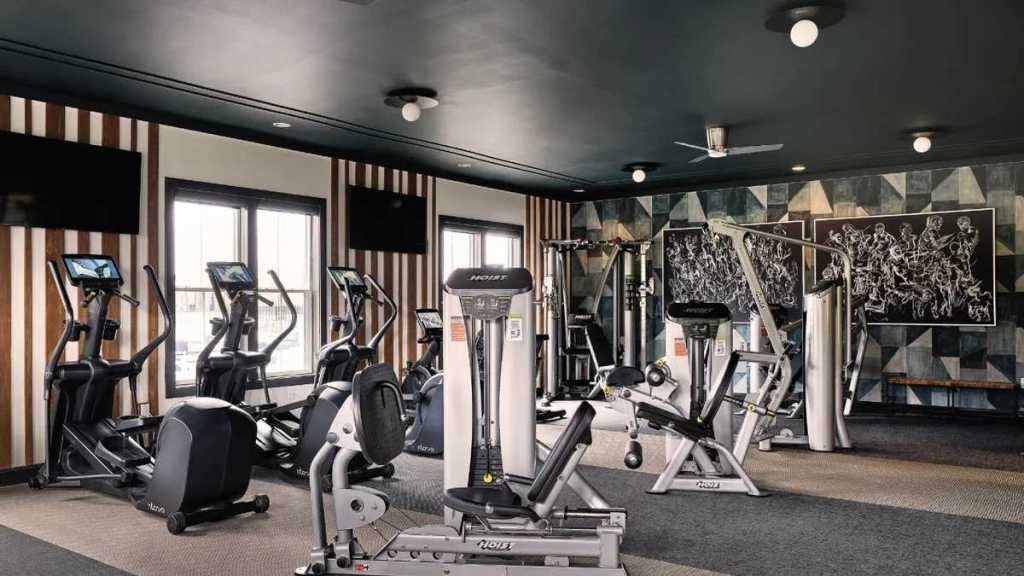
A gym membership in the HRM runs anywhere from $40 to over $100 a month, depending on the facility. That’s $500 to $1,200 a year for a space you drive to, find parking for, and share with strangers.
Many condo buildings in Halifax and Dartmouth — particularly in the Kings Wharf, Alderney, and downtown core areas — have well-equipped fitness centres included with your condo fees. Ellipticals, free weights, treadmills, sometimes yoga or spin studios. A 45-second elevator ride from your front door.
The square footage those amenities occupy would cost you dearly if you were paying for it inside your unit. As shared building space, the cost is distributed across every resident and baked into condo fees that, in most cases, are already factoring in building maintenance, insurance, and common area upkeep.
The Rooftop Patio: Outdoor Space Without the Yardwork
Here’s a trade-off that doesn’t get enough credit. Many buyers assume they’re giving up outdoor space when they move to a condo. Sometimes that’s true. But in buildings with rooftop patios, communal gardens, or outdoor terraces — particularly some of the newer builds and waterfront properties in Dartmouth — you’re gaining access to outdoor space with a view that a backyard on a typical lot could never provide.
No lawn to mow. No fence to repair. No driveway to shovel. The outdoor upkeep that consumes weekends in a house simply doesn’t exist in the same way. And in its place, you have a patio with a panoramic view, maintained by the building, available whenever you want it.
Is it the same as having a private yard? No. But for a lot of buyers — particularly those who are honest with themselves about how much they actually used the yard at their last place — it’s a genuinely appealing trade.
Concierge, Security, and the Intangibles
There are benefits to condo living that don’t show up on a floor plan at all. Buildings with concierge service receive your packages when you’re not home. Buildings with secure underground parking mean your car isn’t sitting outside in a Nova Scotia winter. Buildings with controlled access mean you’re not worried about who’s wandering the hallways.
For buyers coming from houses, these aren’t trivial. They represent a genuine shift in how you inhabit your space and your neighbourhood — less maintenance overhead, more built-in peace of mind.
The Right Question to Ask
When you’re evaluating a condo, the square footage number is just the starting point. The better questions are: What does this building give me access to that I’d otherwise have to pay for separately, build into a house, or simply go without? What spaces do I actually use daily — and what am I paying to store or maintain out of habit?
A 900-square-foot unit in a building with a gym, guest suite, rooftop patio, storage locker, and concierge is a very different proposition than a 900-square-foot unit with none of those things. And a 1,400-square-foot house with a spare room that’s mostly closed, a yard that’s mostly mowed, and a gym membership that’s mostly unused is worth examining just as honestly.
Condo living, done right, isn’t about making do with less. It’s about being intentional about what you actually need — and letting the building handle the rest.
Thinking About Making the Move?
If you’re weighing condo living against a house — or just trying to figure out whether a specific building’s amenities are worth the trade-off for your lifestyle — I’m happy to walk through it with you. I’ve helped buyers navigate these decisions across Halifax and Dartmouth for years, and the conversation is always worth having before you make your next move.
Dale Cameron, REALTOR® | RE/MAX Nova
902-240-0768 | dale@HalifaxDartmouth.com
“Don’t Be Caught Saying I Should Have Bought It When I Saw It!”

Leave a comment